Is Acroyoga for Beginners? (An Honest Answer)
The short answer is yes. The longer answer dismantles a few assumptions you probably have about your own body.
The myths that keep people from trying
The most common reasons people talk themselves out of acroyoga before they start: not flexible enough, not strong enough, too heavy, too old.
All of them are wrong.
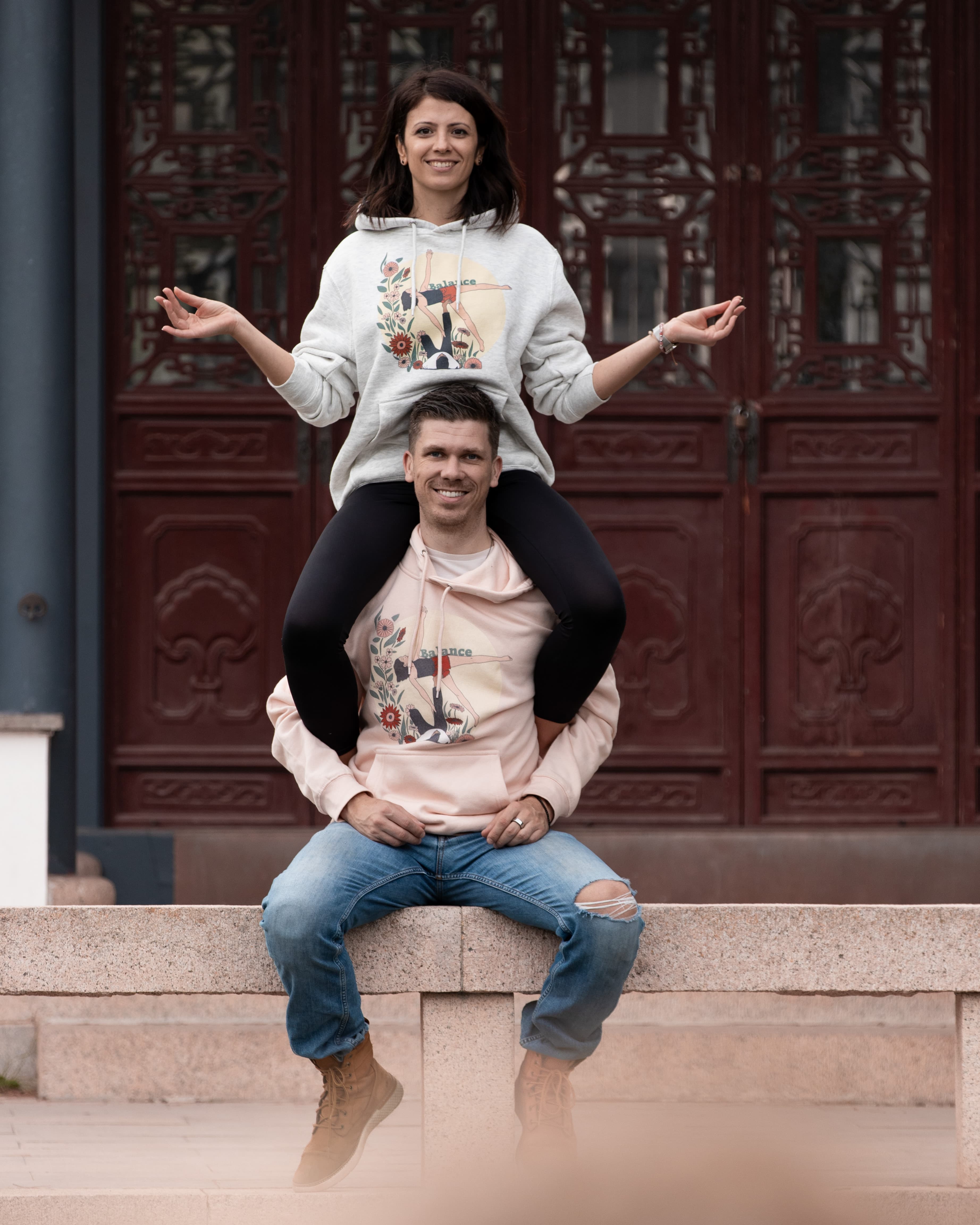
Maria, co-organiser of the Mediterranean Acro Convention, has personally lifted former professional rugby players. She's practiced with people well into their 70s. Flexibility helps, but acroyoga will lengthen your hamstrings — it's not a prerequisite. Strength matters, but technique matters more, and technique is learnable in a session. Age is largely irrelevant as long as you stay young at heart.
The other misconception worth addressing: that there are fixed roles. That big people base and small people fly. In reality, everyone at MAC is encouraged to try both — and for good reason. Basing teaches you what flying feels like from the other side, and vice versa. It builds empathy, communication, and a much deeper understanding of the practice.
The actual minimum requirement
If you can walk up a flight of stairs, you can do acroyoga.
No yoga background needed. No gymnastics. No partner work experience. The entry point is lower than almost anyone expects, and the proof tends to show up within the first 30 seconds of trying. Maria has watched complete beginners — people who were certain a pose was physically impossible for them — achieve it on the first attempt, simply with the right cue and the right attitude.
Where beginners actually get stuck
It's rarely the body. It's the belief system.
Beginners watch experienced practitioners and can't picture themselves doing the same thing. That mental gap — between what they see and what they think they're capable of — is the real obstacle. Once the movement gets broken down into its components, the gap closes fast.
There's also a physical dimension that catches people off guard: deep stabilising muscles in the hips that most people have never consciously used. They make your first sessions feel shaky, and they'll be sore in places you didn't know existed. That's not a sign something's wrong — it's your body waking up to a new kind of movement.
How MAC handles beginners specifically
Workshops at MAC are streamed by level — beginner, intermediate, and advanced tracks run separately, with clear prerequisites so nobody ends up in a class that's over their head. Within beginner workshops, the approach is progressive and unrushed: every element is broken down until it's genuinely embodied, not just attempted.
The five-day structure does something a single workshop can't. By day five, people are performing the same flows that required heavy spotting on day one — sometimes in front of the Mediterranean sunset, good enough for a video they'll actually want to share.
On consent and communication
One thing worth knowing before you arrive: acroyoga is a full-body contact sport, and that means consent and clear communication aren't optional extras — they're core to the practice. MAC attracts participants from across Europe and beyond, which means different cultural backgrounds and different assumptions about physical boundaries. The workshops address this directly. It's part of what makes the environment safe enough for beginners to take risks.
The thing most people don't expect
The physical progress is real, but it's not what people tend to remember. What catches most beginners off guard is how much acroyoga turns out to be about connection — with a partner, with a community, with yourself. The poses are the vehicle. What they're carrying is something else.
If you're on the fence about whether you're ready: you are. The question is just whether you're curious enough to find out.
MAC 2026 — October 7–11, Malta
MAC 2026 has wrapped up. Join the mailing list to hear about the next edition first.
Capped at 75 participants for an intimate, high-quality experience.